

Nexus Notes – Uncertainty, climate risks, data visualisation, taxonomy and more
Nexus Notes #22 – 7 notes for 7 days


Nexus Notes1 is my weekly field log of seven signals across biodiversity, climate, water, and systems. I publish these shorter briefings between my long-form essays.
Hi team!
Hope you enjoy this week’s offering. Please scroll down to the question of the week! This is something new and I’m really keen to get your input. Let’s get the conversation going!
Joy Division: 40 years on from ‘Unknown Pleasures’, astronomers have revisited the pulsar from the iconic album cover2. Monday’s post on river extremes featured a river flow hydrograph (river flow time series) plotted in the theme of the famous Joy Division album cover. This piece in The Conversation discusses the science underpinning what the lines represent 40 years on from its release. In short, signal from a pulsar — formed during the death of a star.
“The album cover shows 80 wiggly lines which correspond to 80 flashes of radio waves from B1919+21, as the neutron star made 80 turns in 107 seconds.”
Over in The Lab3 this week I share the methods I used to produce the figure in R, including code. This is a bit of a look behind the scenes at something that occupies our time as scientists. Turns out most of us ecologists don’t spend our time cuddling furry animals or pointing binoculars at birds, but writing code, and wrangling and analysing data (on a good day!).
‘I love midges because I know what their hearts look like’: is the passion for taxonomy in danger of dying out? A harrowing piece about the death of taxonomy as a field. “I am one of the last few standing. It’s crisis all around. As the taxonomic community ages, we are not being replaced. You cannot get the grant money. There are almost no university or museum positions,” he says. “My science is dying.” (Art Borkent speaking.) One could say similar things about natural history in general. These fields are getting harder to fund as the splashy Nature paper is just not a realistic outcome of funded research for most. We’ve argued in the past that basic natural history data is key for building robust predictive models.
We need a global assessment of avoidable climate-change risks. “To understand the urgency of emissions reductions, policymakers and citizens need a full analysis of what is at stake.” Yes! This is well worth the read. I’ve argued a lot about the need to go eyes open into the future, including exploring the worst case scenarios. This paper is just absolutely speaking my language!
“Policymakers and citizens are aware of some of these risks, but not necessarily how severe they will be, how rapidly they might emerge or which risks are avoidable. Government leaders need to know the severity and urgency of such risks to help them to make well-informed decisions and set priorities. So far, they have only a partial view.”
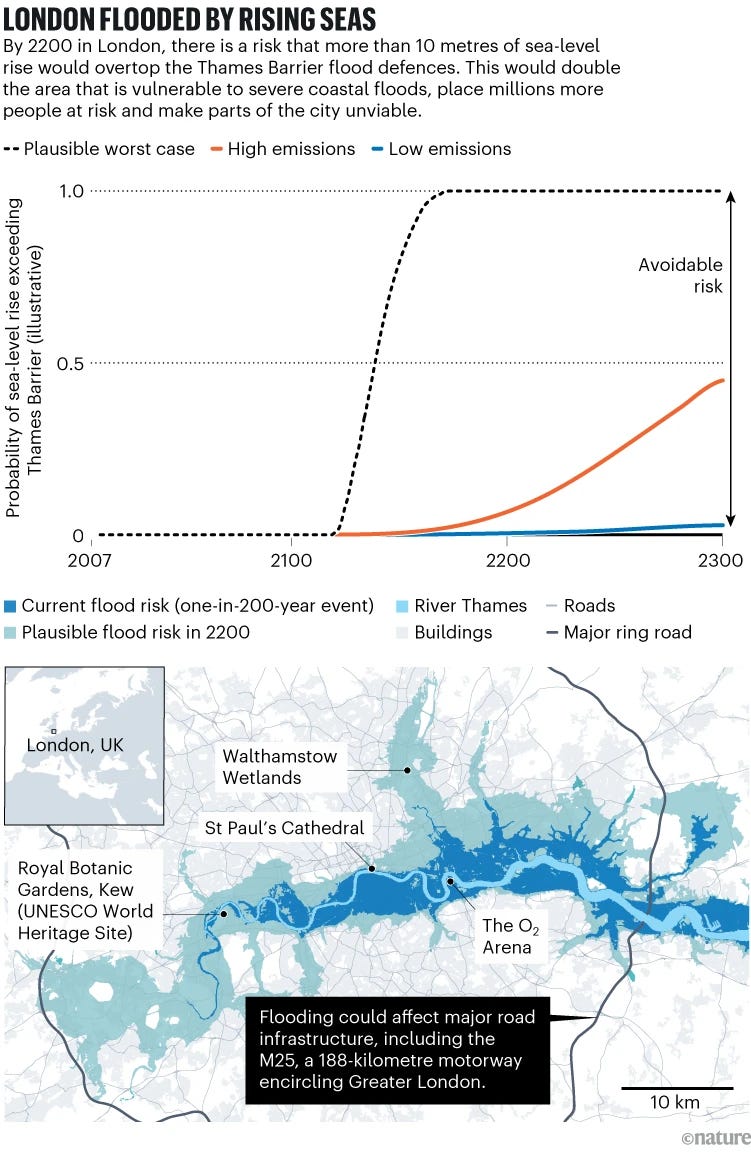
Talking about uncertain futures, here’s a catalogue of tools and resources for decision-making under deep uncertainty (DMDU). We’re facing an increasingly uncertain future. Traditional decision-making approaches follow a ‘predict-then-act’ approach. DMDU shifts to more exploratory ‘what-if’ approaches and considers options that avoid failure across a wide range of plausible futures — embracing uncertainty. The authors here identify 28 resources and 16 tools for supporting DMDU research and practice, shared freely in an online repository.
Continuing on the theme of uncertainty, and anxiety and overwhelm for that matter, Oliver Burkeman always brings interesting takes, such as his recent post on there being no such thing as a fresh start. These big issues we talk about here can certainly leave us feeling overwhelmed and anxious for the future of ourselves and our kids. But let’s just commit to small actions for now and take the pressure off. As he says, maybe we should unclench a bit.
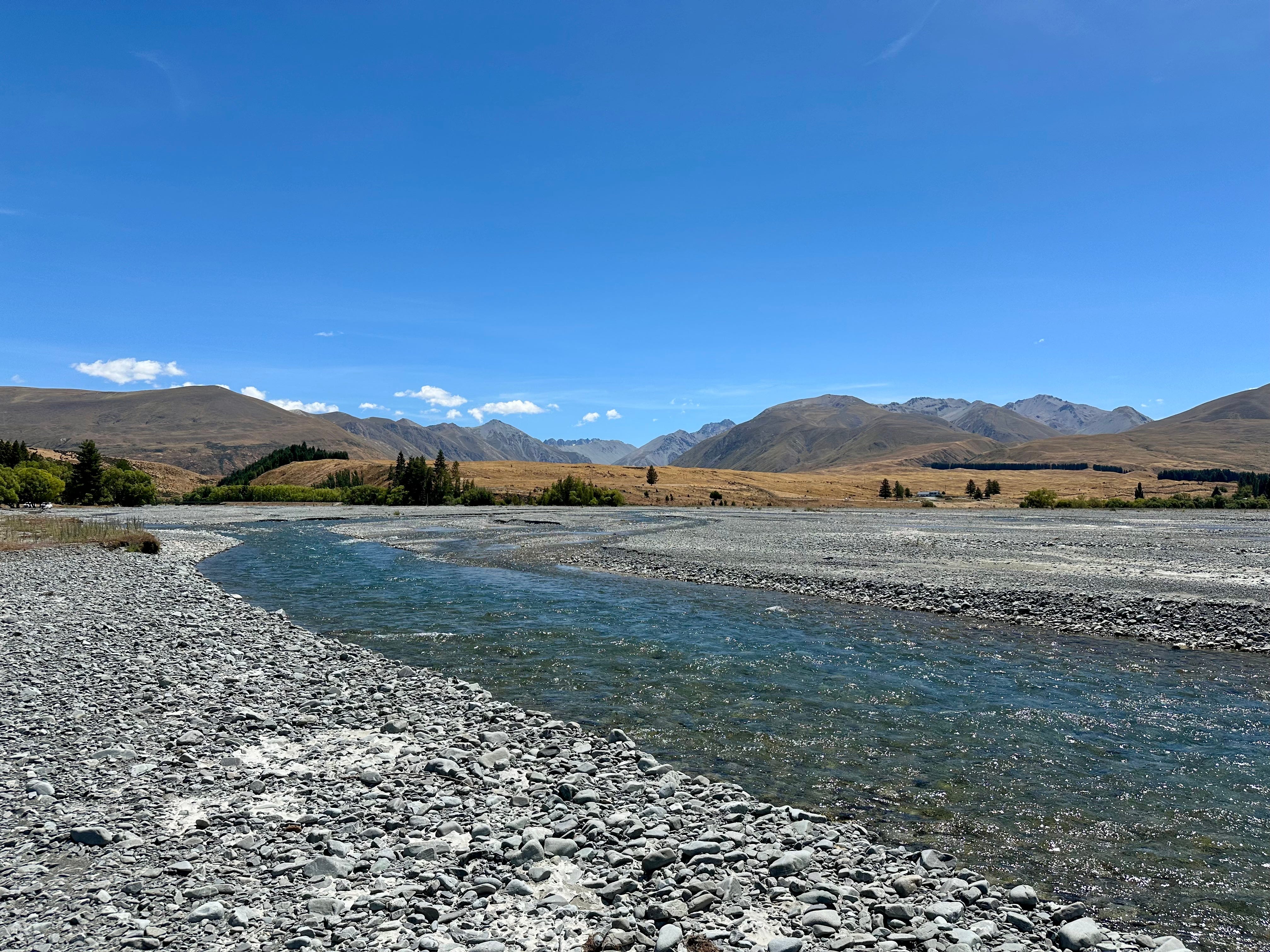
New paper from my group out in Oikos, led by ex PhD student Holly Harris. “Asynchronous river floodplain environment dampens ecological variability across scales”. We show that habitat variability is key to supporting consistent life in braided rivers. Based in the Cass River, Tekapo, NZ, Holly’s research showed that different parts of the river fluctuate at different times, which smooths out the boom‑and‑bust cycles of insects and fish across the whole river ‘braidplain’. Despite individual patches fluctuating wildly, the overall system remains relatively stable. So, maintaining a mix of habitat types is key for maintaining stable food webs in these dynamic river systems.
Before you go, I’d love to hear your perspective…
QUESTION OF THE WEEK
What’s one river you know that was permanently changed by an extreme event — and did it ever recover, or do you think it ever will?
Hit the comments below! Let’s start a conversation!4
Keep being awesome,
Jono
Last week, I tried embedding these into the main post, but it turns out it was a bit much for one email, so I’m pushing on with separate posts this week.
And a cool backstory to how a pulsar from space ended up on the cover of an album.
I modified the lab to be standalone posts rather than one big static page so it looks a bit different now.
Let me chime in with some thoughts. We reviewed hundreds of studies in our paper. And what was clear is that they all change dramatically following extremes in some way or another. Some recover, some don't. But what we mean by recovery is a very blurry thing. Is it a return to what it looked like, to the species that were in it, to the functions it performed, to the food it provided? It could be any of those. Or is it to a system that self governs? They all mean different things. But one thing is clear to me -- they will inevitably face an increasing frequency of extremes as the future unfolds, so we need to think about ways that we can help sustain the functions we want to see maintained. Ideally, that would just be as natural state as possible, but it depends on the system and how dependent humans have become on it. Lots to think about here. More in next Monday's post about some potential levers up our sleeve.
This sentence in the Stott et al. paper calling for a global climate risk assessment mentioned in Signal 4 caught my eye:
“Policymakers might be aware that more people will die in heatwaves in a hotter climate, yet be unprepared for mass casualties if tens of thousands in one region were to die in conditions exceeding the limits of human tolerance.”
It reminded me of the opening section in Kim Stanley Robinson’s 2020 novel “The Ministry For The Future”, where he imagines a catastrophic climate change-related heat event taking place in India, the magnitude of which finally spurs nations to take serious action on climate change. While that section is distressing to read, the book is ultimately an uplifting one, especially since all the technology, geopolitical and financial-economic ideas and actions that are implemented in the book are already feasible / happening somewhere in the world right now. It is also very interesting on the potential leadership role it envisages for China. https://www.goodreads.com/book/show/50998056-the-ministry-for-the-future