


Welcome to Predirections
Future-focused writing on biodiversity, climate, and water — by Prof. Jonathan Tonkin.
What you’ll get from this newsletter
Timely, science-based insights into the intersecting challenges of biodiversity loss, climate change, and water management — and the solutions that matter most1.
As a working scientist, I write for readers who want more than the doom narrative. This newsletter is about understanding what’s coming — and acting on it.
You’ll get:
Fresh takes on key research and new policy directions
Behind-the-scenes stories from a solutions-focused research lab
Deep dives on biodiversity, climate, water, and how we adapt
Practical, global-to-local insights for people who care about the future
Occasional personal reflections as a father and scientist living these questions
🌱 It’s for the curious, the concerned, and the people trying to make a difference.
Predirections publishes weekly. All core essays are free — written from 20 years at the frontier of ecological research.
For a good place to start and find an index of some of my and my readers’ favourite posts, go here.
Why become a supporter?
Most environmental data is public. What isn’t is the time to read it all, connect it, and figure out what matters — or what it’s like to actually do this kind of science.
Predirections is entirely open access and supported by voluntary reader patronage. Locking content behind paywalls reduced how many people this research reached. In line with the spirit of open science, all essays and syntheses are 100% free to read.
If you value this work, voluntary support keeps the publication open and sustainable for everyone:
Community Patron — $20/year ($2/month): An accessible entry point if you want to support open science at a light, low-friction rate.
Supporting Patron — $60/year ($6/month) [Recommended]: The standard rate that keeps this research open and sustainable for everyone.
Founding Patron — $100/year ($10/month): For readers who want to deeply support open-access environmental synthesis.
Supporters at any level get more, just not more content. What you get is something closer: a seat in supporter-only discussions where the thinking behind each essay gets worked out in the open, and direct conversations with me along the way. Think of it as stepping inside the workshop, not just reading what comes out of it.
Who am I?
I’m Jonathan Tonkin (Jono for short) — an ecologist and biodiversity scientist at the University of Canterbury in New Zealand, where I’m a Professor and Rutherford Discovery Fellow.
My research has spanned continents and ecosystems, but I’ve always returned to one core question: How do we predict and adapt to environmental change in a way that supports life — all life?
After publishing 100 peer-reviewed papers — including in Nature and Science — I want to share what I’ve learned beyond academia: translating the latest science into plain language, before it even reaches the headlines, to inform, inspire, and equip a wider community.
I'm also a parent of two young kids. That perspective shapes everything I write.
You can learn more about my research and lab at tonkinlab.org — we focus on biodiversity science for a changing world.
🏆 Recently, I was honoured with the New Zealand Prime Minister’s MacDiarmid Emerging Scientist Prize.
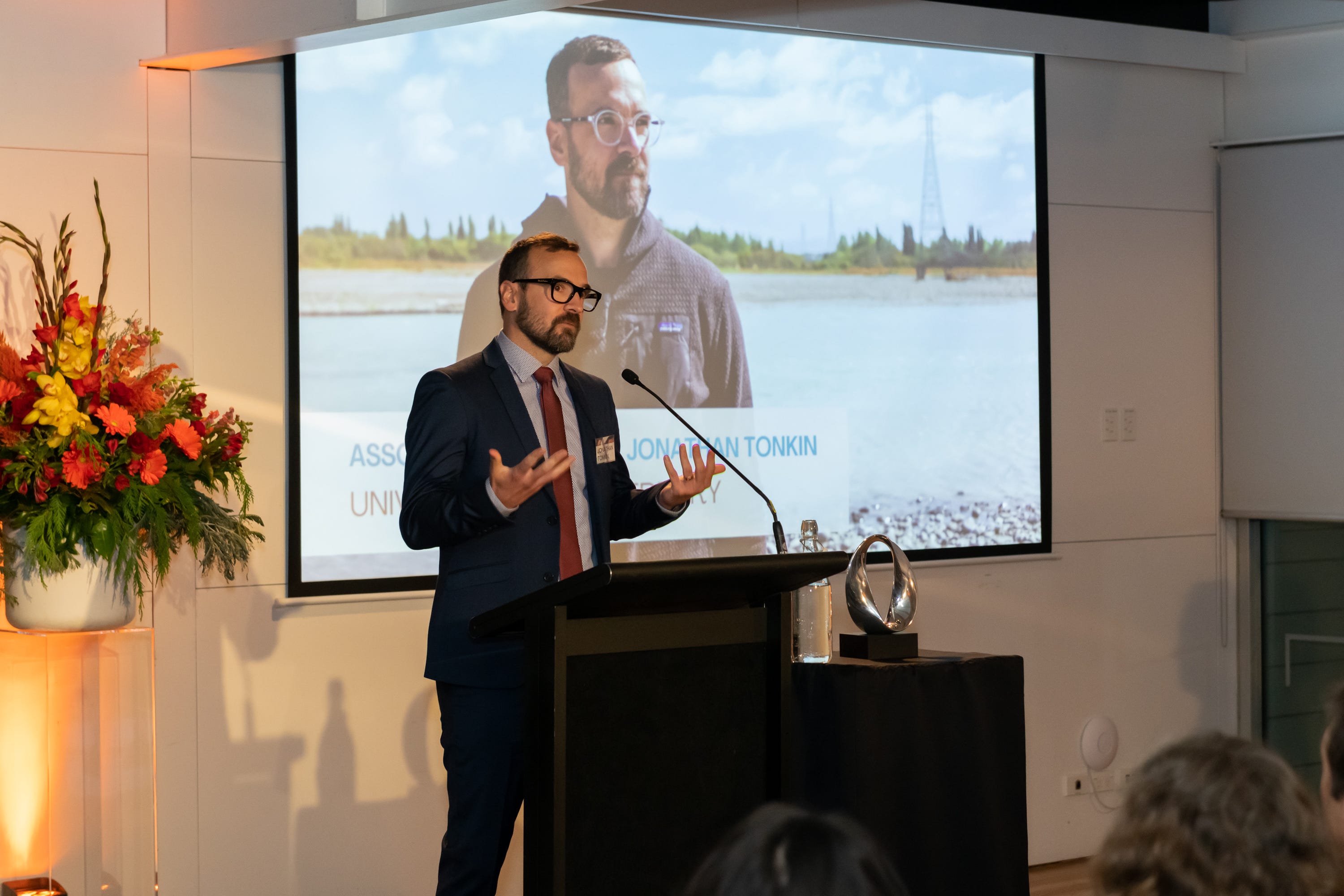
I’m also over on Bluesky and LinkedIn if you want to connect there too.
Never miss a post
Subscribe free to get every new edition in your inbox. Or upgrade to paid to support independent, scientist-led writing on biodiversity, climate, and water — it’s the best way to make this work sustainable.
Be sure to check out the archive for older posts.
See what paid supporters are saying


You can also join an active chat
PS: Why the name?
It’s a bit of a play on words. My background is in ecology and biodiversity science, with a special focus on freshwater ecosystems. The name combines many of my interests and the theme of this blog: prediction and anticipation of future change, redirection of effort and resources, adaptation of future policy and management to unknown environmental threats, and, more generally, solutions to the joint biodiversity loss-climate change challenge.
