

Systems under strain
Nexus Notes #24: Weekly signals from the biodiversity–climate–water nexus.

Hey folks!
I’ve been loving having such an in-depth conversation in the comments of the post earlier in the week on The future is being stolen one small decision at a time. The comments section is several times longer than the actual post. That shows we’re onto something here.
Here’s a few other things I’ve been paying attention to this week. Don’t forget the question of the week is at the bottom of the post. Let’s get the conversation going!
Last week I talked about extortionate publishing costs in academia. This post by Adam Mastroianni does a great job of summarising the state of things. Once again, it’s about incentives and the allure of short-term rewards. We can’t expect scientists to act like saints inside systems built to reward shortcuts.
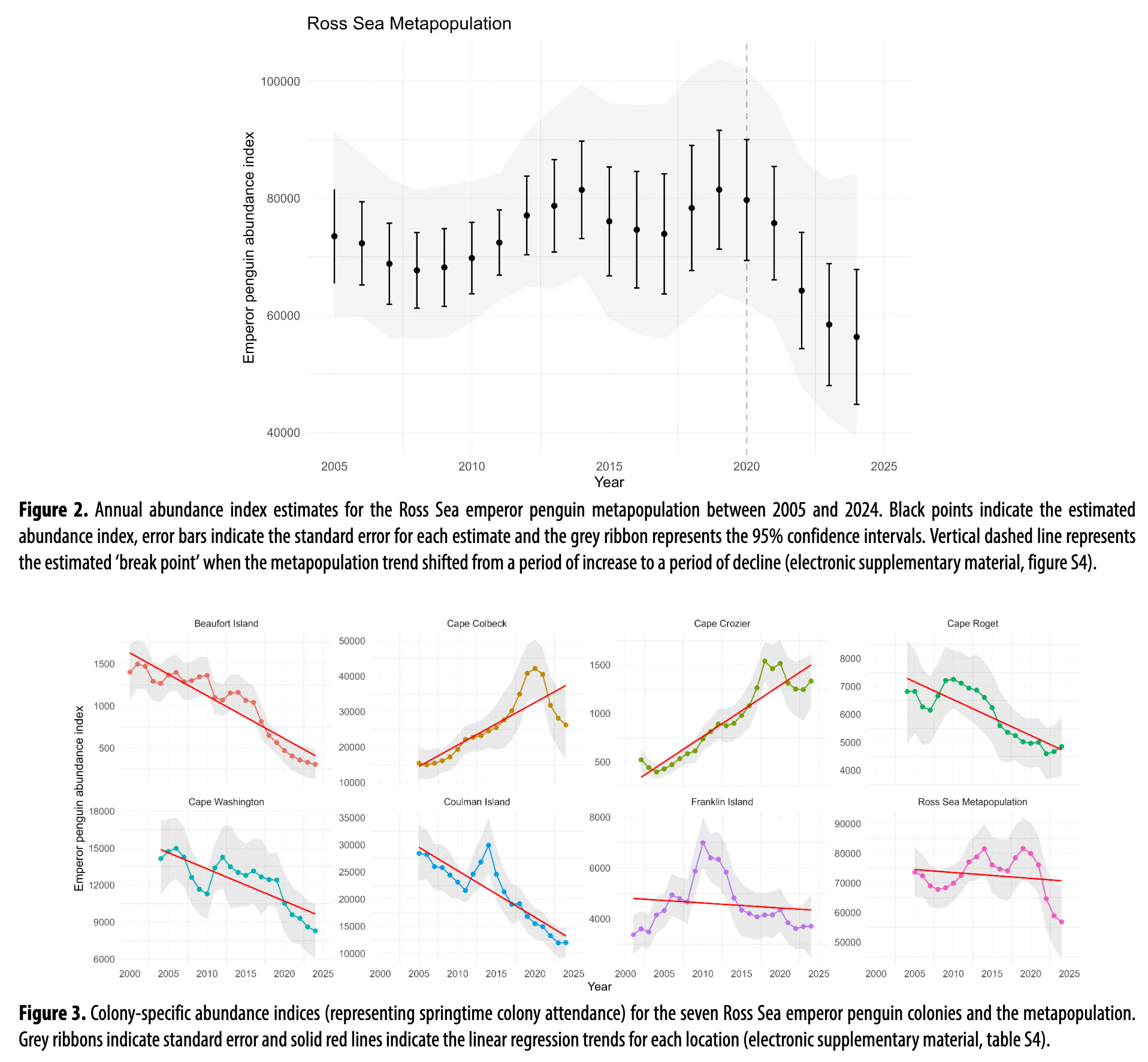
Another paper out — it’s been a good run. This one led by Rose Foster-Dyer. Evidence of emperor penguins’ sensitivity to sea ice fluctuations. The massive drop from 2020-2024 represented about 23,000 birds in 5 years or ~32% of the regional population. The Ross Sea population itself represents more than 30% of the global population, so this crash is concerning. From Rose herself:
We used very-high resolution satellite imagery to study the Ross Sea emperor penguin population over 20+ years. We found there may be fewer emperor penguins in 2024 than in 2005 across the region, and while the two southernmost colonies increased in size (possible due to inter-colony movement), four others may have declined. We also identified a link between population change and winter and spring sea ice concentrations and El Niño phases. These are of course springtime estimates based on satellite imagery, which come with vast uncertainty, but our results offer some insight into how these fascinating birds may adapt to future change.
Paul Ehrlich recently passed away. There’s been a lot of commentaries online as you would expect for someone so influential — revealing both positive and negative perspectives on Ehrlich and his work. He was incredibly productive, with over 1,100 academic articles, but he was best known for his book The Population Bomb. This piece in The Conversation nicely covers his contributions and the controversies around it. Jim Salzman provides interesting context to “The Bet”, which played out over decades. “The real debate was never over whether resource prices will rise or fall. It’s over what markets can see and do, and what happens when they are blind. This was a truth Paul Ehrich could see, and Julian Simon could not.”
In Wednesday’s post, I talked about local shops closing down and being replaced by strip malls filled with chain stores. Incidentally, my favourite surfboard shop (Sadhana surfboards) is closing down. Like much of the local and NZ surf community, I’m gutted. I don’t know the reasons behind this, but I sincerely hope it’s not because of financial struggles. Competing with big, mass produced brands cannot be easy. It feels like another death by a thousand cuts moment, where a local business closes only to not be replaced (I'm only assuming this last part right now). The loss of true, local craftspeople is heartbreaking, particularly when replaced by mass production machines that feed a massive, fragile global supply chain.
Also in Wednesday’s post, I talked about investing in designing 10-minute cities, where essential amenities are accessible within a short walk. While cities are aspiring to achieve 10, 15, 20-minute city status, evaluating whether they get there is difficult. The linked paper discusses some approaches to do so. They also provide a very cool interactive web app for exploring proximity to amenities in NZ cities.
Thanks to Chris Meehan for alerting me to the podcast Screw This...Let's Try Something Else in the comments of the last post. I’m only part way into the first episode, but really enjoying it so far. It’s about communities taking things into their own hands to get things done. We all need a little bit of inspiration like this. As Karen O'Brien says, You Matter More Than You Think!
Over in The Lab this week: Trying to understand my unread books (and why they comfort me). My unread pile is getting ridiculous — but I’m starting to realise why this doesn’t bother me. I penned some thoughts for paid subscribers on my relationship to an ever expanding pile of unread books. This is the beginnings of a future post on the topic. I wanted to give my paid subscribers a chance to help shape the post as I continue to work it through. You get to be part of the process.
Before you go, I’d love to hear your perspective…
QUESTION OF THE WEEK
I keep coming back to one uncomfortable question related to our work on shifting social norms.
What’s doing more damage right now — despair or apathy?
Are we stuck because so many people feel hopeless… or because apathy has settled in deeply enough that change feels unnecessary, or someone else’s job?
New here? There’s a massive archive of posts from the last two years of publishing.
Chat soon,
Jono
I’d say apathy. I am astounded by the number of people (who should know better) who are quite prepared to normalise wrongs so long as they do not immediately effect them.
Probably apathy and despair. Apathy in respect that we often feel so removed from the subject that it is hard to get emotionally involved. And if you do get involved, despair creeps in when you feel like you are getting nowhere anyway.
A couple of years ago I voiced my concern to our local council about the lack of trees on berms and high fences in our area. I emailed them, got no reply, emailed again, rang them numerous times and eventually (after many months) a council representative knocked on my door and basically said nothing was going to change. So that left me feeling a sense of despair. Also it comes down to not really knowing how to tackle these issues as an individual.