

Nexus Notes - River protection, ocean equity, and important questions to ponder
Nexus Notes #19

Welcome to Nexus Notes — a twice-monthly collection of things that caught my attention: ideas I’m exploring, articles worth reading, and threads that connect to the bigger picture of climate, biodiversity, and water. It’s part reading list, part reflection — designed to spark curiosity and help us think differently about the challenges ahead. I publish these in between my longer-form essays.
Hi folks,
It’s been a wild time here in New Zealand over the past couple of weeks. A massive weather event hammered the east coast of the North Island, unfortunately resulting in the loss of life and causing massive damage across much of the country. As I said on Substack Notes the other day:
The warm air mass sitting over New Zealand right now is hammering much of the country, hitting already wet ground in places. These “preconditioned compound events”, where existing conditions amplify impacts, can have massive consequences for humans and ecosystems as we’re already seeing play out. Such events will only increase in frequency and magnitude as the climate continues to change.
I’ll be writing about these different types of extreme events in the near future when my new review paper on extreme events and river biodiversity comes out in March.
Of course, NZ isn’t the only place that carnage is unfolding. It’s hard to put things in context right now given the mayhem that’s going on in the world. I wrote recently that:
The nightmare that continues to unfold in the US reminds me how easily short-term chaos eclipses long-term existential risk — and, understandably, it has to. But societies can’t function when instability like this is continually rewarded.
And beyond the US, the scale of human suffering — including the recent reports from Iran — is devastating.
Where do we start in times like this? It can be tempting to think that climate change and biodiversity loss are secondary to these issues but really they’re all part of a suite of global interconnected challenges that are acting simultaneously.
Last Nexus Notes I polled you about how the news of the US withdrawing from global climate and biodiversity bodies made you feel about the future of international cooperation. 73% of you were deeply concerned / discouraged, 16% were hopeful other nations will step up (I was among these), and 11% were frustrated, but acting locally.
It’s trying times, but if we continue to speak out, take action in however small or large steps we can justify, and continue to have honest, frank conversations, we’re on the right path.
Onto some things I’ve come across recently…
National assessment of river protection in the US
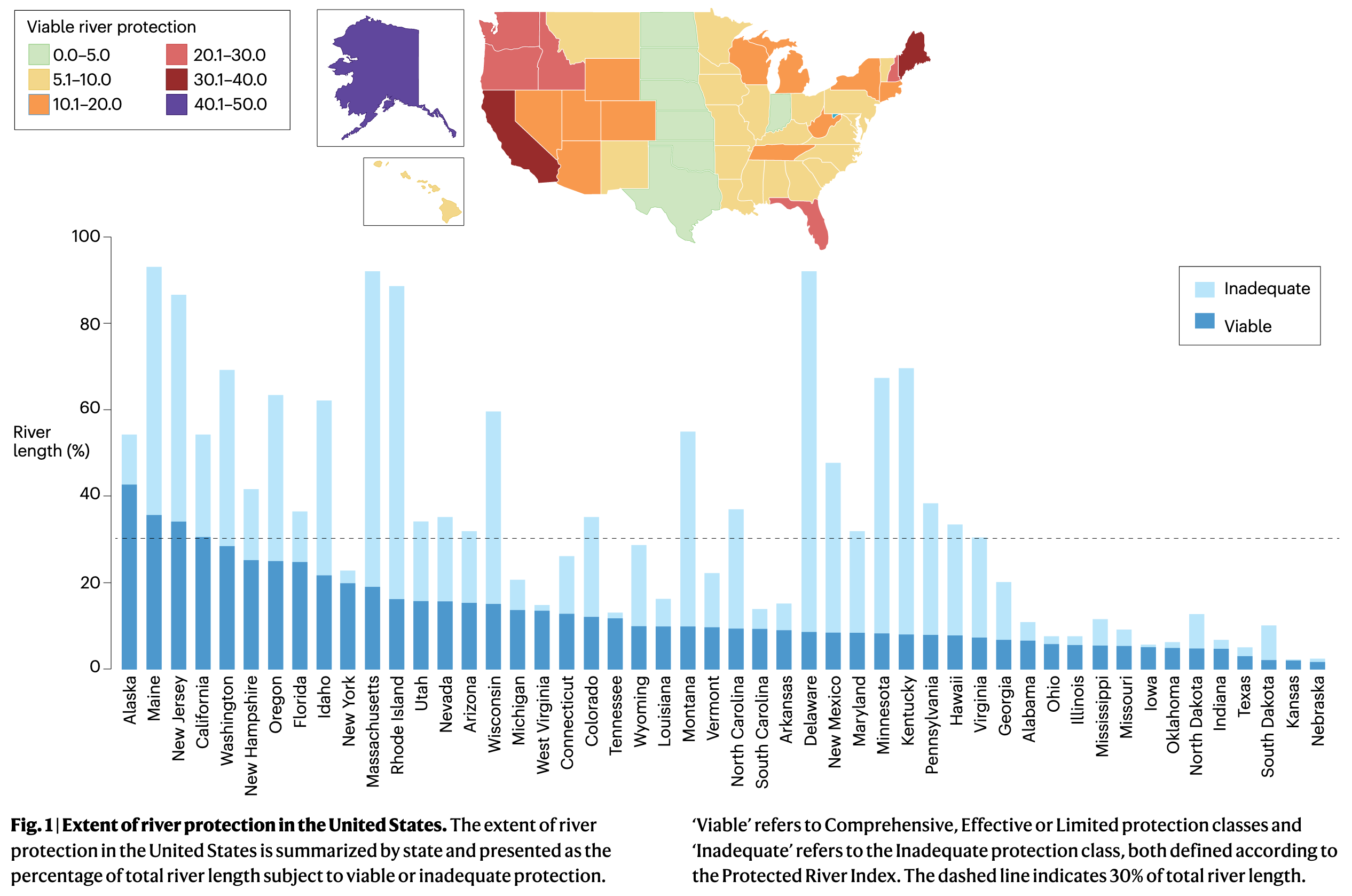
Unsurprisingly, much of the world’s rivers remain unprotected. But it’s difficult to know by just how much. My good friend Julian Olden and colleagues (co-led by Lise Comte) recently put together a national assessment of river protection in the US. The numbers are staggering, but not surprising..
As Julian said:
America’s rivers are alarmingly under protected. Just over one-tenth (12%) of rivers in the contiguous United States and less than one-fifth (19%) nationwide are currently protected at a level deemed viable, while two-thirds remain entirely unprotected under the mechanisms assessed in this study.
The abstract from the policy brief summarises the situation well.
“River protection in the United States remains scant, with just over one-tenth of river length in the contiguous states protected at viable levels, often by land-based protection measures that fail to capture the full diversity of the nation’s river systems. There is an urgent need for policies that safeguard, strengthen and expand freshwater protections to secure rivers that sustain both people and nature.”
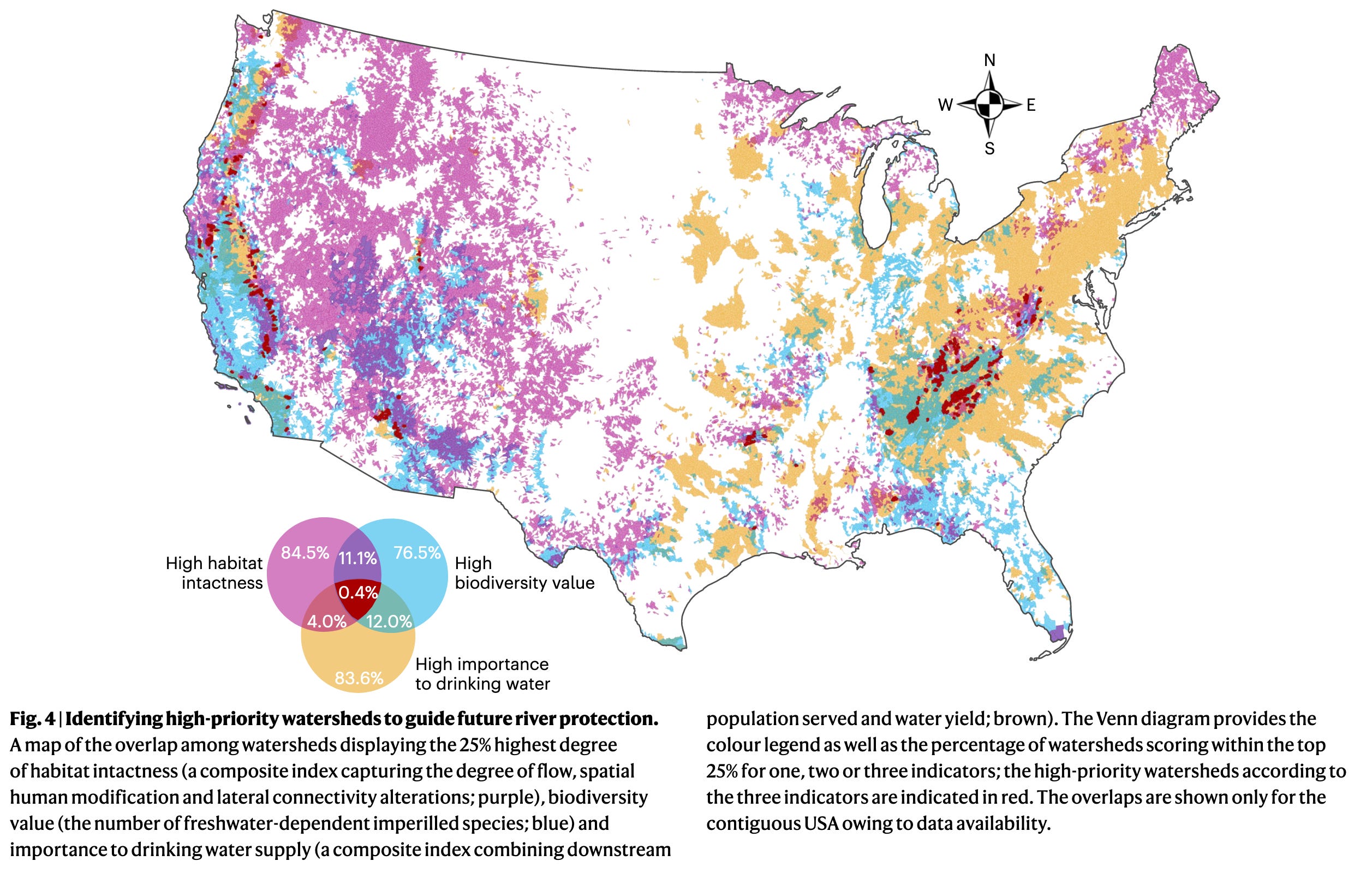
Once you have this information alongside aspects like habitat intactness, biodiversity value, and importance to humans, it becomes possible to prioritise where to protect next.
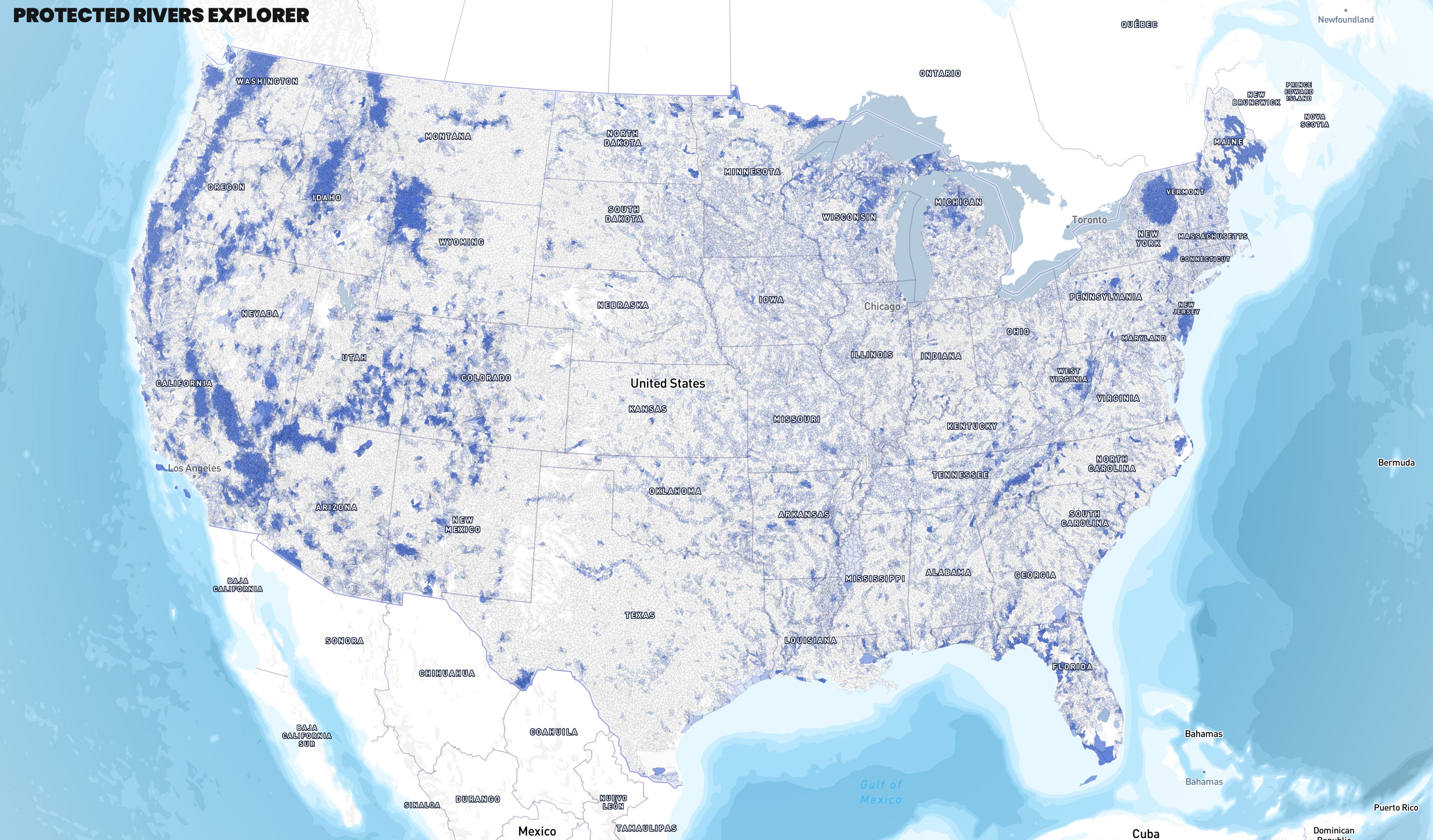
There’s even a cool protected rivers explorer interactive tool.
I’d love to see this done on a global scale. Does anyone have a spare decade?
Go here to see the companion papers in Nature Sustainability: full paper and associated policy brief.
A new index for ocean equity
Inequity is increasing around the global oceans. Certain countries and corporations are increasingly focused on leveraging the ocean’s resources to meet human demands. But the costs and benefits are disproportionate. The few actors benefiting are passing the costs onto others. From pollution to biodiversity loss, the costs are often felt most by the most vulnerable groups like small-scale fishers, Indigenous Peoples, and smaller nations.
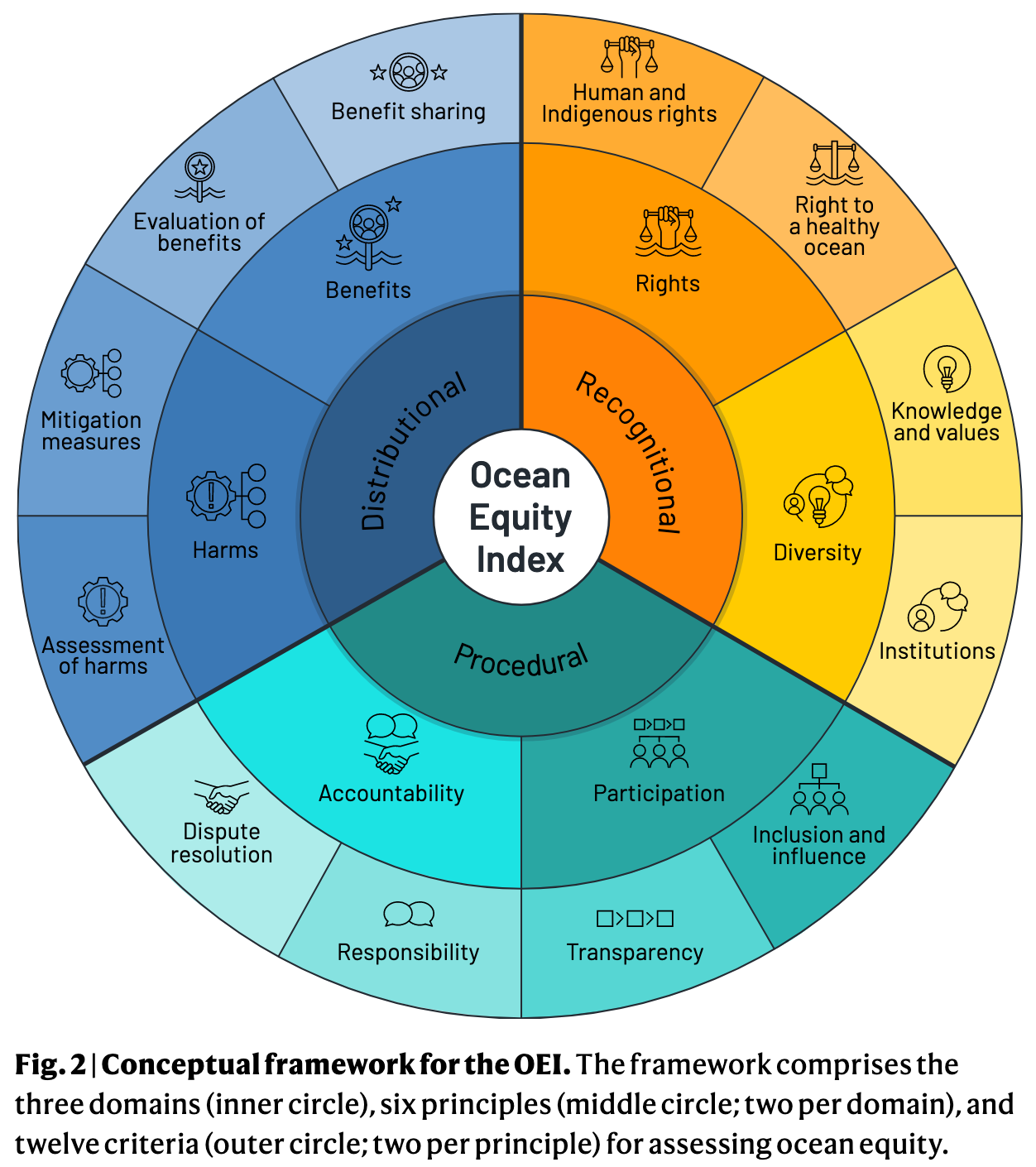
Published in a new paper in Nature, the Ocean Equity Index (OEI) seeks to guide the development of more equitable ocean governance and management. The OEI is a “framework for assessing and improving equity in ocean initiatives, projects and policies”, ensuring better outcomes for people and ecosystems. The framework comprises twelve criteria for assessing ocean equity — shown below.
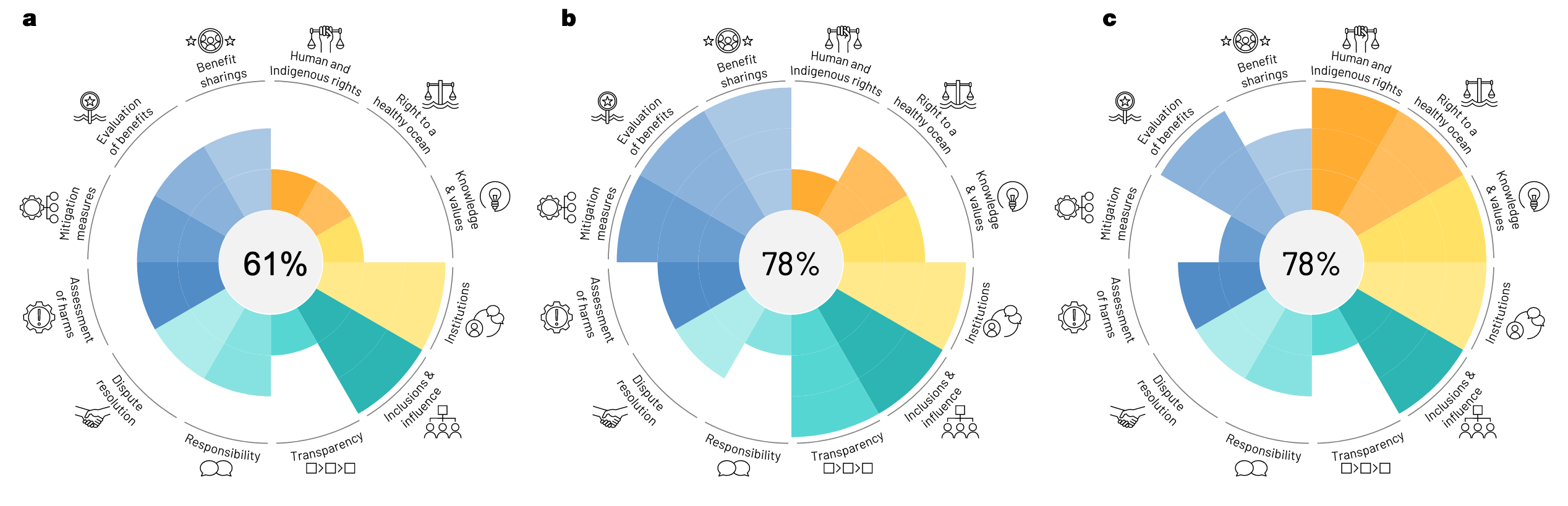
The paper goes on to demonstrate the utility of the index via case studies. Three of the six are shown below. The paper is open access so I’ll leave it there for now.
Check out the supplementary spreadsheet for the tool itself via the link below. Currently the OEI website is now showing itself as live but I would assume it goes live soon — the paper has just come out.
Blythe, J. L., J. Claudet, D. Gill, N. C. Ban, G. Epstein, G. G. Gurney, S. D. Jupiter, S. L. Mahajan, S. Mangubhai, R. Turner, N. J. Bennett, S. D’Agata, P. Franks, J. Lau, G. Ahmadia, M. Andrachuk, P. Annasawmy, V. Brun, E. S. Darling, A. Di Franco, L. Evans, N. Lazzari, J. Naggea, V. Relano, M. C. Pertuz, S. Villasante, and N. Zafra-Calvo. 2026. The Ocean Equity Index. Nature. DOI: 10.1038/s41586-025-09976-y.
Initiative I’m loving: Treescapes — Voices of the Future
Treescapes — Voices of the Future. Courtesy of Kate Pahl in the comments section of my recent post on legacy.
Their summary says it all.
The ‘Voices of the Future’ project aimed to work with diverse children and young people to co-develop more hopeful, equitable, resilient treescapes of the future.
We aim to integrate children’s and young people’s knowledge, experiences and hopes with scientific knowledge to co-produce new approaches to creating and caring for resilient treescapes that benefit
the environment and society.
There is a bunch of resources, toolkits and publications available here.
Christmas present I want: The Present Clock
If you’ve been reading my work for a while, you know I’m particularly fond of and fascinated by Earth’s rhythms, particularly how they shape global biodiversity. Indeed, seasonality is one of my core areas of research. For that reason, I love this clock called The Present.
“The single hand of The Present accurately traces Earth’s journey around our Sun, spanning one continuous revolution every 365.24-days.”
Yes, please!
Climate writers to be reading on Substack

I was fortunate to be featured in this recent post by Wren Anstey, PhD alongside Katharine Hayhoe, Ed for Planetary Futures, Anne Therese Gennari, and Nicole Kelner. Go check it out to learn more about these writers.
The most important question of your life
What pain do you want in your life? What are you willing to struggle for?
Courtesy of Mark Manson, here.
I enjoyed this piece reflecting on asking ourselves these questions rather than “what do I want to be?” or “what do I want out of life?”.
Good things require struggle. For me, writing can feel like sticking needles in my eyes at times, but I’m willing to struggle through it.
Last Nexus Notes image location
A little too tough in hindsight, this one. We had a few guesses but none on the right island. Julrig featured again — with the closest guess. The image was right in the centre of the zoomed out image here: the coastal zone of the northern part of Sumatra on the Strait of Malacca coast. Google maps pin.
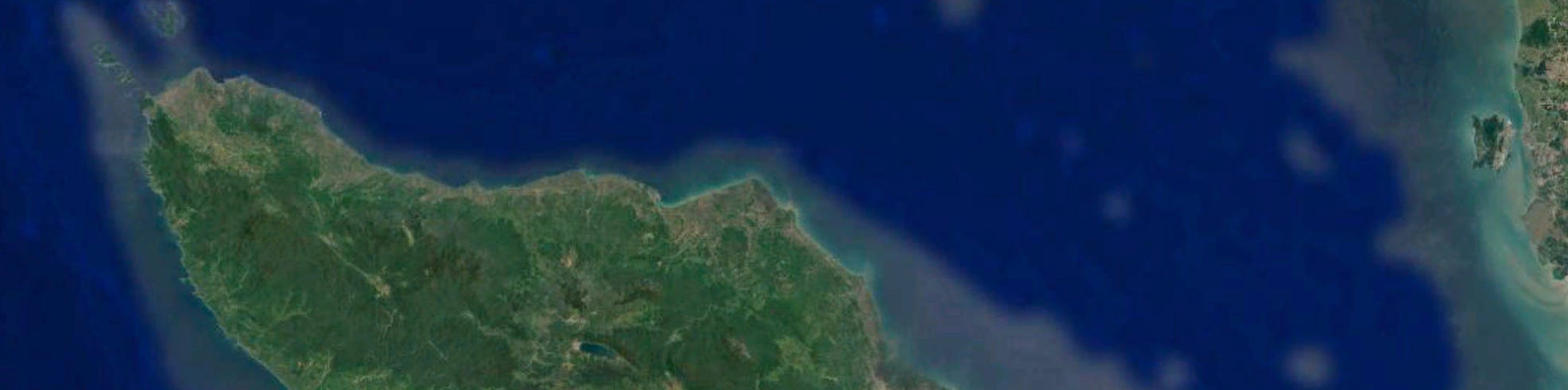
Don’t forget to leave your guess for this week. What’s been on your environmental radar?
If you enjoyed this post, consider sharing it. You can also help others find it by hitting the ❤️ button.
Until next time…
Jono
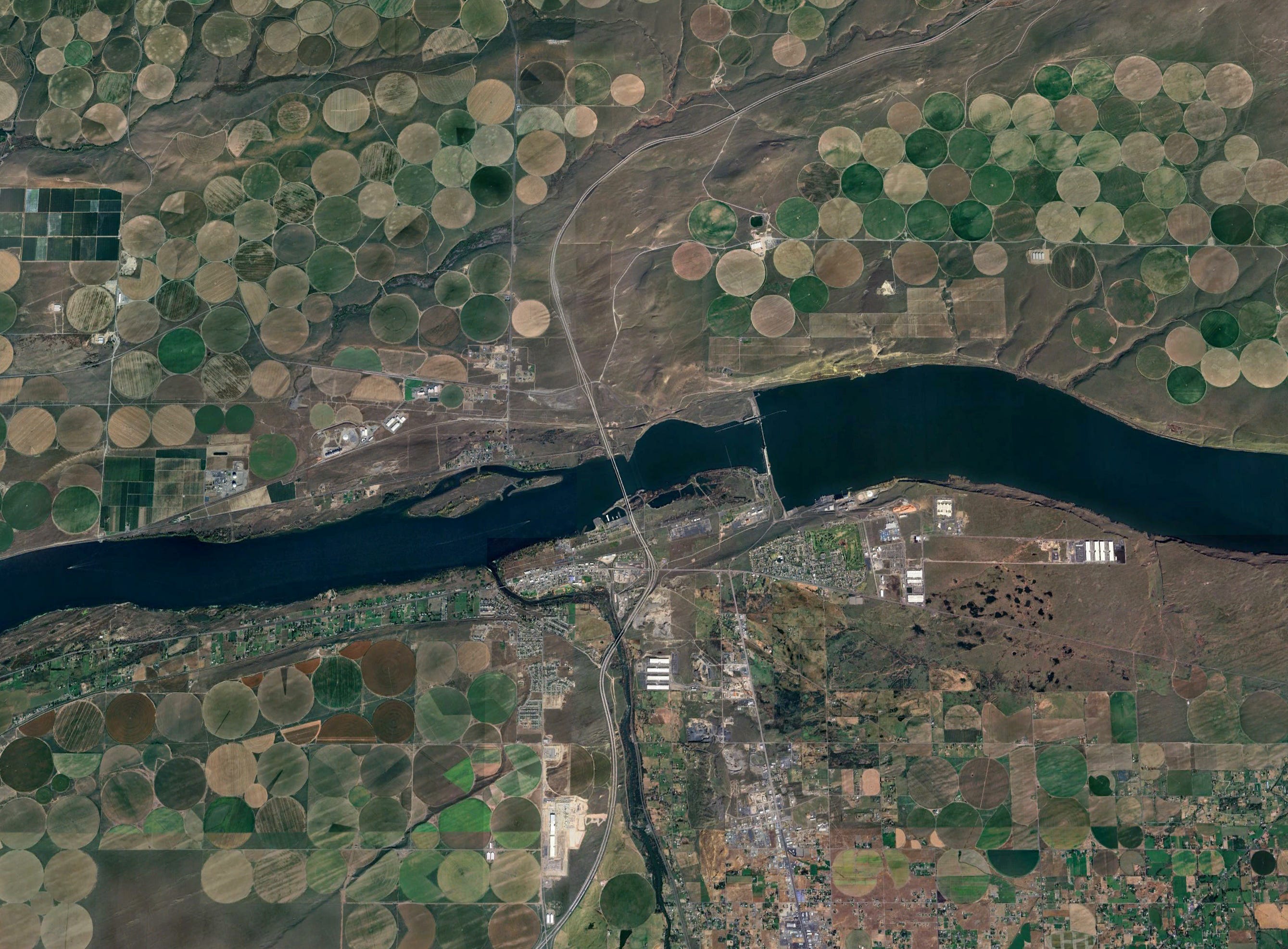
Im starting to worry that a lot of today’s political churn could be a stress response by humans to a planet that’s getting less predictable: higher food and energy prices, harsher droughts and floods, insurance retreating, migration pressures, and communities feeling less secure. Even if people aren’t naming “climate change” out loud, is this a subconscious reaction to its effects? Oh. McNary Dam...
McNary Dam