

Built to flood
Why the best systems are built to flood


What does a functioning river look like to you? Is it straight, neat, and tidy? Or is it messy, chaotic, and winding?
We’ve spent decades making rivers look like the former. But while they may look neat and tidy, they can create much more mess in the long run. Engineers saw rivers overflowing their banks as a problem to be solved. So they narrowed channels, built stop banks (levees), drained wetlands, and constrained floodplains.
These rivers, optimised for efficiency, were indeed more efficient at getting water out of the way. They were also efficient at protecting people and infrastructure from floods. Until they weren’t. Efficiency works up until a point. But over-optimising for efficiency can result in catastrophic failures.
And here’s the kicker. Narrowing a channel doesn’t just hold back water from the floodplain, it speeds it up and transfers that risk — and amplifies it — downstream. And when a levee eventually fails, it fails big, due to everything it was holding back.
This isn’t something unique to rivers. Wherever you look, the same trade-off is apparent: efficiency concentrates risk rather than removing it.
We have a habit of treating resilience as inefficiency. But as we continue to learn from events with the Strait of Hormuz, over invest in any one resource, location, or system, and the costs can stack up when issues arise. Just last night I saw a news headline urging us to fill up our tanks before price rises hit us again. We’re all feeling the costs of these events.
But what looks inefficient is often what makes systems resilient. Slack built into systems can smooth out the fluctuations that can end up costing us. Resilience through redundancy and spare capacity looks wasteful right up until conditions change.
Build slack into a supply chain and our pockets are saved when one part of the system is hit. Invest all your eggs in one part, by contrast, and costs escalate. Sensible investors invest in portfolios, not a single company. Aircraft systems build redundancy into their systems to avoid catastrophic failures. Spare capacity in electric grids avoids blackouts. And rivers connected to their floodplains minimise catastrophic failures downstream.
A floodplain is essentially a river’s spare capacity. During base flow, floodplains can look under-utilised. Like wasted land that’s not being optimised. But during floods, they reveal their purpose. By giving floodwaters somewhere to go, floodplains reduce pressure on the rest of the system. What previously seemed unnecessary is suddenly critical.
The thing is, resilience requires capacity that appears unnecessary most of the time.
And it’s not just true of ecosystems. If you’ve ever optimised every hour of your calendar, you’ll realise how fragile such perfect efficiency can be. A sick kid, a traffic jam. And don’t get me started on interruptions — they suddenly become existential threats. The whole system starts to fail because there was no slack in it.
The same applies at larger scales. The Strait of Hormuz has taught us how fragile supply chains designed for maximum efficiency can be when a single chokepoint fails. Electricity grids need reserve capacity or blackouts ensue. Financial systems need buffers in place to avoid crashes. The point is, resilient systems rarely operate near 100%. Doing so leaves them with no capacity to absorb shocks.
Floodplains have a cost. But so does fragility. The question is why we are so willing to pay for one and not the other.
Here’s the deeper trade-off
Floodplains occupy land. Backup systems cost money. Diverse portfolios reduce maximum returns. Redundancy requires extra people. Spare time means producing less in the short term. But each of these help to absorb shocks, even out the ups and downs, and reduce the risks of catastrophic failure.
The challenge is really that resilience and efficiency operate on different timescales. Resilience creates value in the future while efficiency creates value now. And our society is so focused on the immediate that we build things that work efficiently now, but are destined to fail over longer timeframes. It’s easy to get hoodwinked by these immediate gains.
The other problem with resilience is that we don’t know when it’ll pay off. It may never. River infrastructure engineered to handle a 1-in-1000 year flood may never see such a flood. So how do we value crises like this that never appear? How do we value the benefits of redundancy that prevented a grid blackout from ever arriving?
Herein lies the trade-off. It’s unfair to compare the visible benefits of efficiency with the invisible benefits of resilience. It’s no surprise that resilience loses.
Beyond all of this is something particularly important but overlooked: when we make space for things, magic happens. Keeping with the river metaphor, rivers that have room to move support inordinate amounts of biodiversity, support rare and threatened species, and provide the dynamic habitats that many freshwater and terrestrial organisms depend on. Giving them space has co-benefits beyond flood risk mitigation.
What can look like disorder to the untrained eye — side channels, wetlands, backwaters, gravel bars, patchy vegetation, and seasonally inundated floodplains — is actually the very source of a river’s ecological richness. The lateral movement that engineers try to engineer away creates the diversity of conditions that many species need to persist. Create space for variation and rivers create space for life. And beyond their ability to suck up floodwaters, floodplains help to recharge groundwater, provide refuge for juvenile fish and birds, and help to clean up water. Floodplains are not just empty holding tanks waiting to be filled, but functioning habitat for many important ecological processes.
Our own work on the Cass River near Tekapo in Aotearoa New Zealand has shown clearly that the more unique habitat conditions a river has, the more stable its biodiversity will be in response to ups and downs in the environment. Channels can move, blink on and off, disappear entirely, but so long as the river has space to self-organise, the emergent properties like overall species richness or biomass will remain the same. Begin to narrow those channels and remove unique habitats, however, and the properties you care about like species richness and biomass become far more volatile through time.
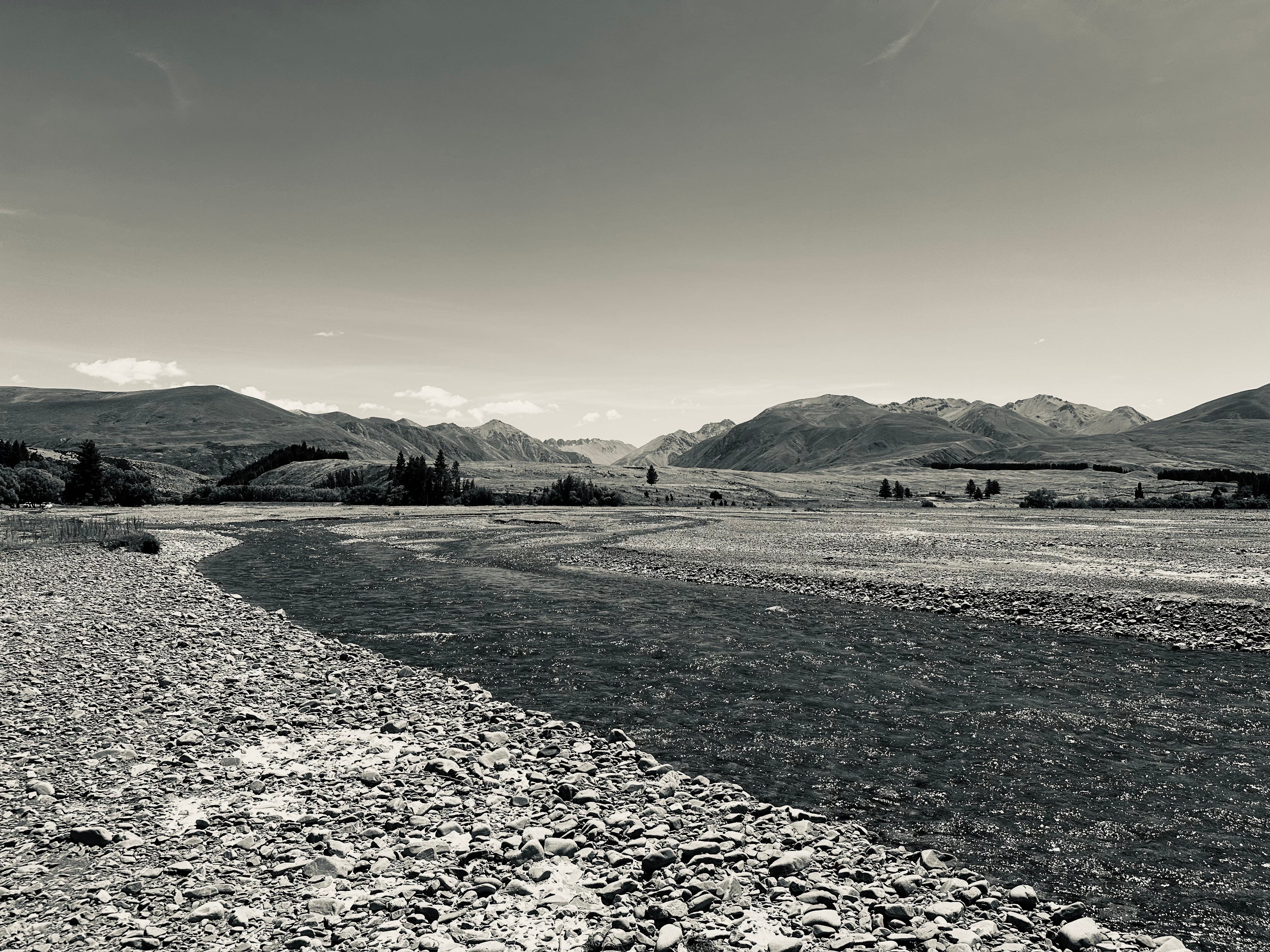
So what does a functioning river look like to you now? If your answer was a tidy one, I hope it isn’t anymore.
A tidy river is one that hasn't revealed its full cost yet.
What's the floodplain in your own life or work?
Unfortunately there seems to be a trend globally not to build slack into anything! The photos of the rivers are such a great example of having slack so that nature can do what nature does so well if it is allowed.
A few years ago I made a film called “Becoming beavers in Bat’s Wood” (on YT) where the landscape, as we (pupils and I) messed about with drainage, faced the dilemma of draining the flood to rescue the drowning trees or keeping the water to look after the tadpoles. Yours is a more thorough piece!